
Generations Apart, Hearts Aligned: Two Women’s Honest Experience of Caregiving
Discovering What It Takes—and What It Gives Back


I wrote this post together with the wonderful Carolyn from England. What connects us is our shared experience with care work — and our love for writing.
It was a true adventure, one I was more than happy to embark on.
I’ve spent 60% of my life as a caregiver. But was it worth it?
Hi, I’m Carolyn from rural Leicestershire, England. I like to look at life through a lens of curiosity in Lightbulbs & Life Lessons . People have always interested me, with much of my life being spent working to enhance the lives of others. I’m a mid sixties, creative soul who enjoys discovering ways to express my thoughts and appreciate the world around me.
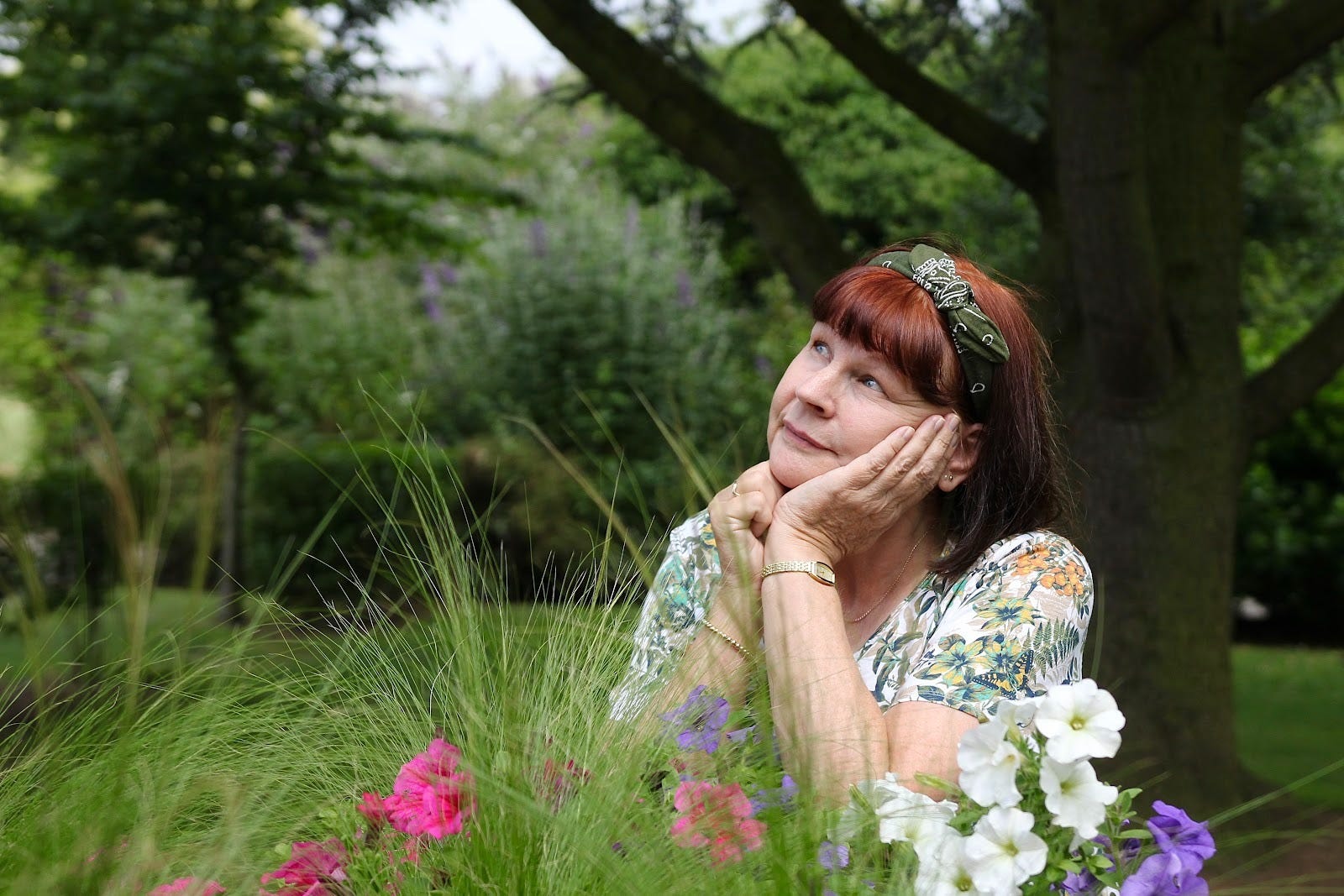
When Judith and I first thought of writing a post on the theme of “the effects of being a caregiver” I immediately thought of my professional caring experiences.
My first paid caregiving positions were as a physiotherapist in a selection of English NHS hospitals. More recently I worked as an independent care support worker for families affected by a dementia diagnosis. Add to this a handful of voluntary roles, including learning disability advocate, post bereavement home visitor and primary school support worker (listening to children who struggled with their reading) and you will see there’s always been an element of caregiving in my adult life.
This side of caring has been a source of great joy, satisfying an inner yearning to be needed, appreciated and useful.
Until seven years ago I was also a chronic people pleaser, which I believe added to my desire to care for others.
Although I enjoyed work, I sometimes struggled to strike the correct balance in my relationships with patients and staff. I lacked an understanding of professional boundaries and found it hard at times to relate to patients and staff without getting emotionally attached to them.
Looking back I see this was partly out of ignorance of different attachment styles and partly from a need to be liked by everyone. No one explained this wasn’t appropriate. As a result I sometimes felt hurt and rejected e.g when staff members appeared distant but were actually relating to me as work colleagues.
Apart from this, I gained a great sense of achievement from being involved in the rehabilitation process after a patient’s illness, accident or surgery. I particularly enjoyed working on the stroke rehabilitation unit and ante ante/ post natal wards. I liked being involved in the progress made, over time, by the former group and supporting the mothers before and after delivery. The continuity of care in those days, meant a high degree of trust was built between a therapist and patient which benefited both.
Since 2011 I’ve had the pleasure to work alongside many older, vulnerable clients and their families, some for as long as six years.
Seeing a client smile as they recount a favourite memory, beat me at Scrabble or harvest tomatoes we planted in the spring are unforgettable moments. I have, unexpectedly, remained friends with the children of several clients, who have now passed away. This has given me the opportunity to be a supportive listening ear over a coffee in challenging months, when grief is at its peak and life is difficult to fathom.
To me this is how joined up, holistic care should look. Being there for the whole family up to and beyond the death of their loved one.
As to my experience of being a family caregiver this couldn’t be more different. I’ve cared for my two daughters as a mother and as a family carer.
My older daughter needed an immeasurable amount of extra support as the medics, my husband and I attempted to discover why she was losing everyday skills at an alarming rate from the age of nine.
Eight years on, after every test you can imagine (and a few you can’t), her being excluded, sent to a special school who sent her home again and being admitted to an adolescent psychiatrist unit at the age of fourteen, we finally had the answer. She was on the autistic spectrum having a condition known as Asperger’s syndrome which was the cause of her challenging and self destructive behaviours. The stress during this time was unimaginable and unmanageable, as I also ended up in a psychiatric ward for a time, having had a mental health crisis.
Once we had the correct diagnosis, it took a further three years to manage her behaviours with medication and appropriate therapeutic interventions. Eventually, after several disastrous attempts to place her in a supportive environment, she is, at the age of forty one, far more stable, living in a specialist unit in the community where the 24hr support staff know her well.
The fall out of all this for us as a family has been massive. Shortly after my mental breakdown my marriage, of twenty years, also broke down. My younger daughter developed ME as a response to the trauma and is now estranged from me. I have no direct contact with either of my children or grandchildren.
Yes, it’s very sad.
Yes, it still hurts. A lot.
I’ve needed years to process everything and the effect it’s had on me.
There’s been much self reflection and self forgiveness - for not being able to be there (physically or emotionally) at times when they both needed me. Anyone who has a child who is in constant danger of hurting themselves or others will understand that they take ALL your energy and ALL your attention, to the detriment of their siblings.
There’s been anger to deal with for the times the system and others let us down.
There’s been many tears for the loss of future family events and times we had hoped for.
If you read between the lines you’ll hear the residual pain. Life was unstable. Tough. Terrible at times and I almost didn’t make it through.
However, I’ve discovered life has a way of allowing you to turn trauma around if you take the time to do the inner healing work and are willing.
By having the privilege of understanding a little of what others may have gone through, or be in the midst of, I’ve gained the right to be a voice, to speak out about the hardest times to help others.
Why ?
Because I know how isolating it can be to not know who to turn to and because I WILL ALWAYS . .
. . BE A CARE GIVER ❤️
Has this resonated with your own experiences? I would love to hear your thoughts and stories.
–Carolyn
5 Lessons from 15 Years of Caregiving
Hi, I’m Judith from The Ocean Says Hi. I live with my family of six in a small town in the southwest of Germany, surrounded by vineyards. I’m in my forties and writing has always been part of my life, though I’ve only recently discovered its creative side. I love the first coffee of the morning, long walks, deep conversations, and—as the name of my project suggests—the ocean.
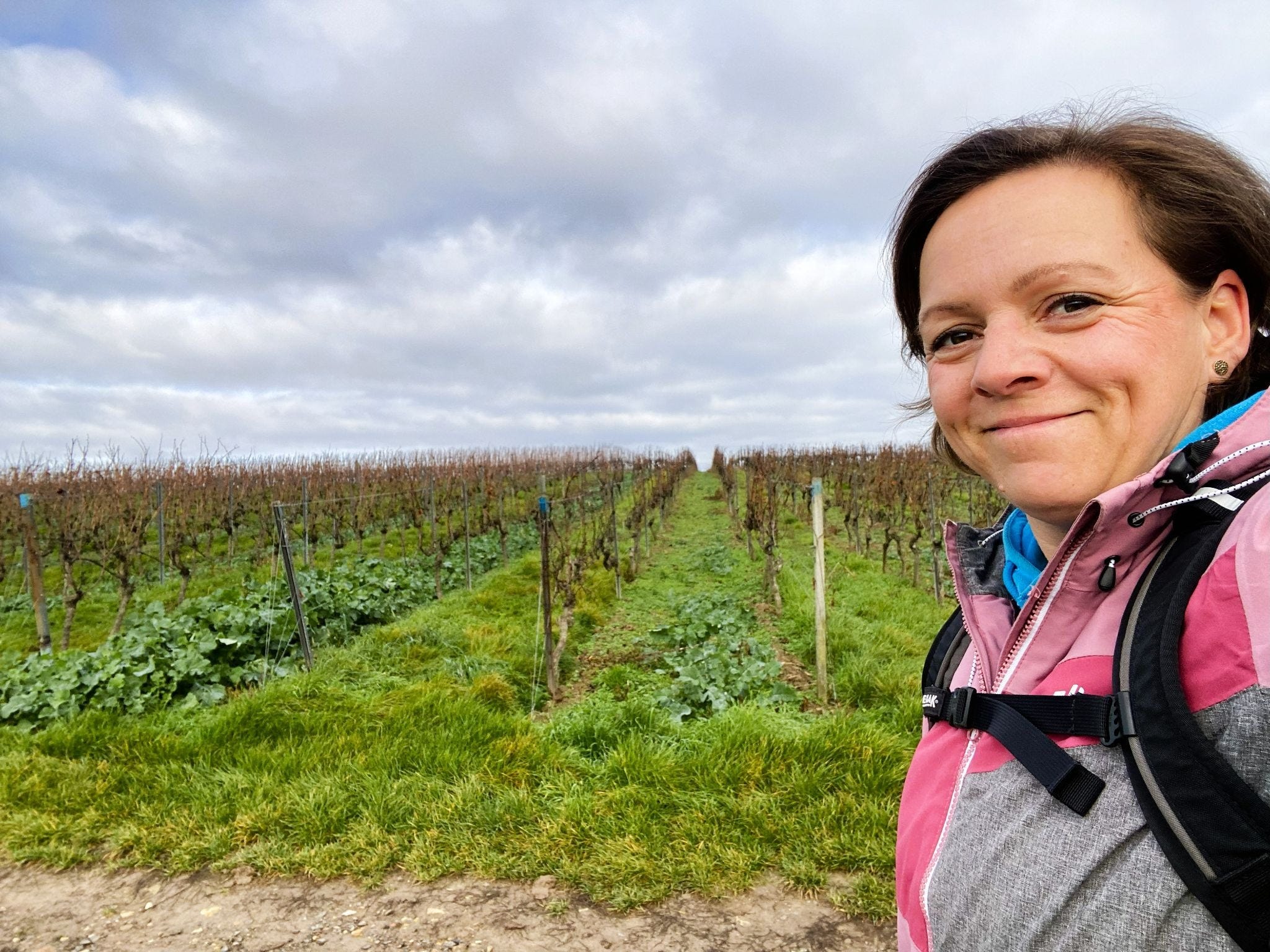
“Remember, done is better than perfect,” Carolyn wrote to me yesterday after I told her about my struggle with this post.
I knew from an early age that I wanted to have children one day. I was still a child myself. There were adults in my life who inspired me—people who had raised children and come out stronger for it. Who had changed for the better.
Grounded, calm, seasoned by life—that’s what I wanted to be.
My oldest child turned 15 last week. My youngest won’t move out for at least another 13 years. You could say I’m right in the middle of family life. Not so deep that I can hardly breathe anymore, but still up to my elbows. Somewhere between enough distance to look back and enough closeness to still feel what it’s like.
Looking back, what advice can I give?
“I just had my first baby. It didn’t go the way I imagined. A C-section. Breastfeeding isn’t working either. I have to supplement. I’m doing everything the midwife says, but it’s not working. I feel like a second-class mother.”
Julia, 28
Dear Julia, you didn’t do anything wrong. The stories you’ve heard about childbirth were either frightening or romanticized. Breastfeeding always looked so natural with the mothers around you—but it isn’t. The fact that both things aren’t going as planned is the reality for most parents.
You will come out of this stronger. On your way there, you may let go of your idea of “right” and “wrong.”
—Love, Judith
“My daughter (3) keeps hurting her little brother (6 months). I can’t leave them alone. She even climbs into the playpen to pinch him. And yet I spend so much time with her. I know she needs it now that she has to share us.”
Johanna, 31
Dear Johanna, that doesn’t mean you’re not giving enough. Siblings are rivals and best friends—they stab each other in the back and defend one another the next moment. They fight for every available resource, no matter how many there are. It’s hard to watch, I know.
You will come out of this stronger. On your way there, you may let go of the idea that giving enough will make everyone happy.
—Love, Judith
“Yesterday, I sat on the toilet nursing my baby while holding my middle child by the sleeve so he wouldn’t step into the glass shards his older brother had just created. I’m losing my mind. Can’t I just get a moment’s peace to do the bare necessities?!”
Jana, 33
Dear Jana, I’m sorry—but I have to laugh. Not because I don’t hear your despair, but because I still remember exactly what that was like. It was utter madness and impossible to manage alone. The famous saying about the village it takes to raise a child is absolutely true. Being alone in such moments is not how it’s meant to be.
You will come out of this stronger. On your way there, you may learn to ask for help and to accept it. We humans need one another. The fact that you need more right now than you can give back doesn’t make you needy, it shows that you’re human. The time will come when you’ll give generously again—with a wide-open heart.
—Love, Judith
“This house is a complete mess, even though tidying up feels like my only job. Clothes, Lego pieces, Perler beads, glitter, scraps of paper, chestnuts, sticks, toy cars with three wheels. Even though I spend all day cleaning, I only rarely feel comfortable in my own home.”
Jen, 38
Dear Jen, you sound like someone who doesn’t just like order, but needs it. It’s not fair that your efforts are so carelessly undone. Even if you can’t imagine it now: one day, things will be different again. You might even find that little handprint on the window kind of sweet.
You will come out of this stronger. On your way there, you may remember that you have the right to a home you feel comfortable in—and you’re allowed to stand up for that. You may stash toys in a box in the basement and lock doors to keep the order behind them just for yourself.
—Love, Judith
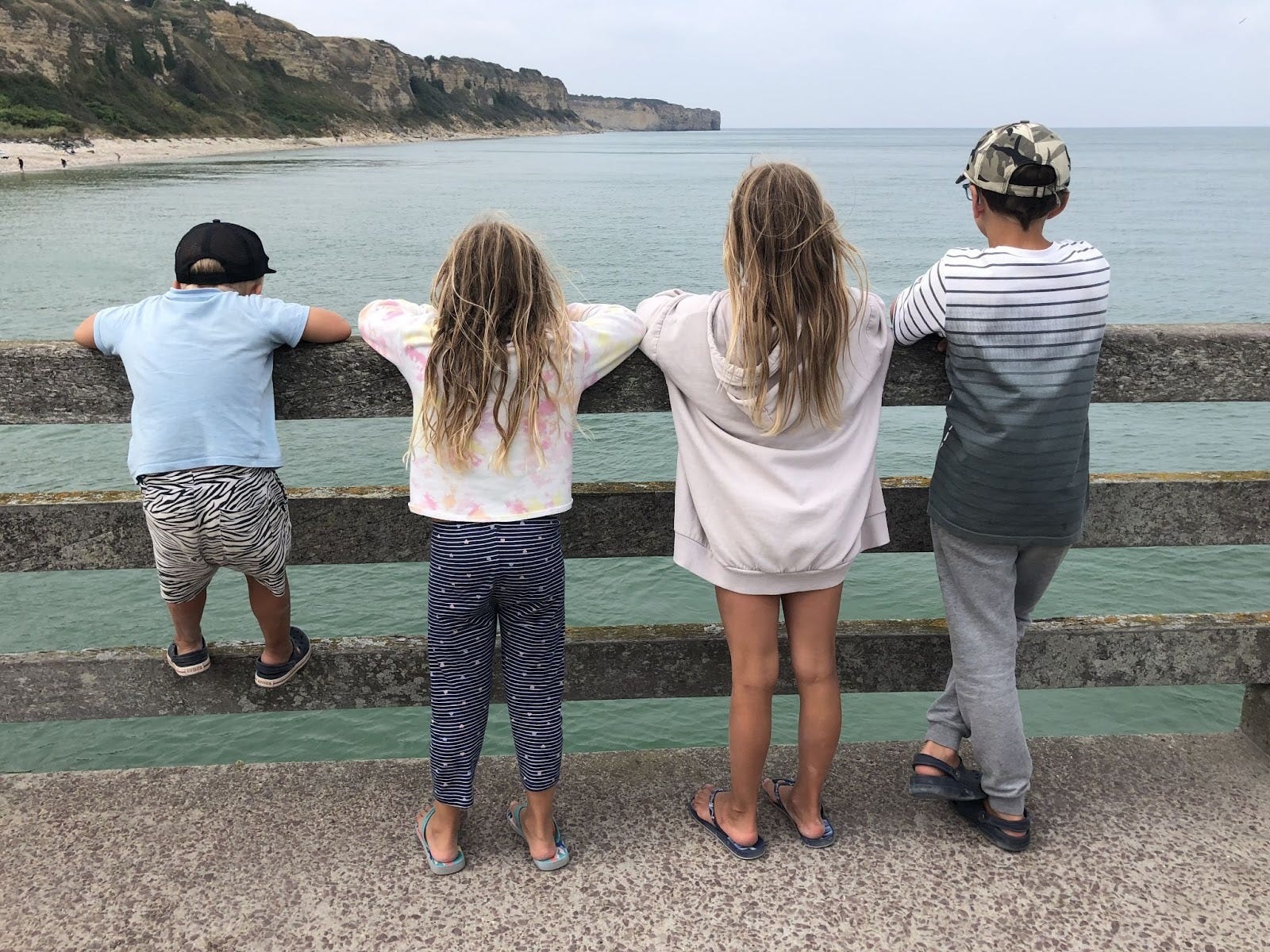
Julia, Johanna, Jana, and Jen—they’re all ordinary parents. I know this not only from experience but from the many honest conversations I’ve had with people like them. (And yes, their names all starting with “J” is no coincidence—each of them holds a part of me.)
I wonder what I’ll say, 25 years from now, then looking back on my current self and the still-ongoing challenges of family life.
Maybe: “Done is better than perfect.”
So, here are my 5 lessons:
Let go of “right” and “wrong”.
You don’t have to and cannot make everyone happy.
Asking for help is human. There are seasons in life where you need more than you can give.
You are allowed to and need to stand up for yourself.
Done is better than perfect.
—Judith
PS: Check out Carolyn’s Lightbulbs & Life Lessons. She writes honest posts about those moments of insight that can change our lives.
Related Post
![[Video] Caregiving—A Behind The Scenes Look](https://substackcdn.com/image/fetch/$s_!GSuR!,w_140,h_140,c_fill,f_webp,q_auto:good,fl_progressive:steep,g_auto/https%3A%2F%2Fsubstack-post-media.s3.amazonaws.com%2Fpublic%2Fimages%2F4d16ed0f-d47a-425b-9392-252bce48a1c9_728x406.png)

Disclaimer
What we share here are our own experiences and reflections on caregiving and family life. We hope they inspire and provoke thought, but they don’t replace professional advice. If you’re going through a challenging time, please seek support from qualified professionals.
 | A guest post by
|
This has been a great writing experience & adventure. Thank you for agreeing to give this collaboration thing a go with me. I appreciate you and the help / encouragement you have given me along the way.
Next step .. going LIVE on Friday !
Thank you both for sharing your insights and experiences on caregiving. I have been a caretaker most of my life, so I know first hand about the emotional toll it can take. I've reached a point where I've had to prioritize my own freedom and well-being, stepping back from caregiving roles to focus on my own growth and happiness. Your honesty and vulnerability in your writing are truly appreciated, and I'm looking forward to your live conversation. For me, it's at 10 am HST. 🙏💗